
Book 1, Question 4
Why Do We Hiccup? Meet Your Twitchy Diaphragm!
We hiccup when the diaphragm, the big breathing muscle under the lungs, suddenly squeezes out of rhythm, pulling in a quick breath that the vocal cords snap shut on.
Hic! Where does that funny sound come from? A hiccup starts when your diaphragm, a big dome-shaped muscle under your lungs, suddenly twitches. Air rushes in for a super quick breath, and your vocal cords snap shut, which makes the "hic" sound. Eating fast, swallowing air or laughing hard can set hiccups off. Babies hiccup a lot, even before they are born, and it is totally normal.
Watch the videoWatch on YouTubeBuy on Amazon
Quick answers
What sets off hiccups?
Fizzy drinks, eating too fast and getting really excited are common triggers.
Do hiccup cures work?
Most hiccups go away on their own, and many home remedies have no scientific proof that they work.
Sources: Cleveland Clinic, Cleveland Clinic, BBC, Smithsonian Magazine
From the book
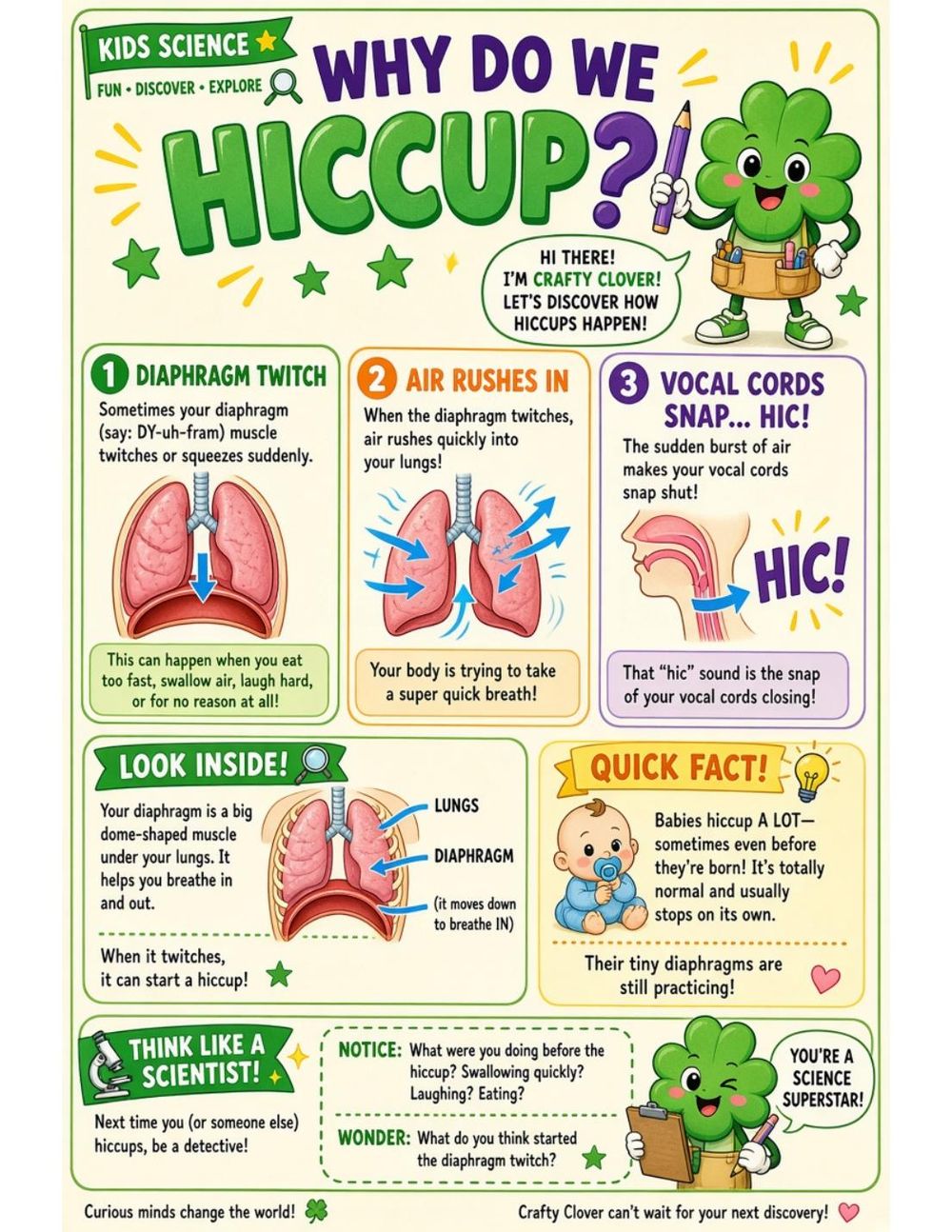
Page from A Million Whys Book 1
More fun facts
- Your diaphragm is the muscle that separates your lungs from your belly. It is in charge of helping you breathe.
- Hiccups happen when the diaphragm squeezes out of rhythm, over and over, and you cannot control it.
- Doctors say hiccups happen when something disturbs the nerve pathways that run from your brain to your diaphragm.
- Fizzy drinks and eating too fast are common triggers. Getting really excited can set them off too.
- Most hiccups are short and go away on their own without any treatment.
- Many home remedies for hiccups have no scientific proof that they work.
- Some scientists think the hiccup reflex may be left over from ancient animal relatives, because tadpoles use a similar action when they breathe with gills. It is an idea, not a proven fact.
Sources: Cleveland Clinic, Cleveland Clinic, BBC, Smithsonian Magazine
Questions kids ask
Are hiccups bad for you?
Usually not. Most hiccups are just a nuisance and stop on their own. Hiccups that last for days are something to tell a doctor about.
Do hiccup cures really work?
Most home remedies have no scientific proof behind them. Hiccups usually stop by themselves.