
Book 1, Question 23
Why Do We Get Fevers? Your Body's Smart Thermostat!
We get fevers because the immune system raises the body's temperature to help fight germs during an infection.
A fever can feel yucky, but it is not random. When germs sneak in, your brain raises your body's temperature set point, like turning up a thermostat. Many germs do not like heat, so warmer temperatures can slow them down and give your immune system a better chance. Resting lets your body put more energy into the fight, and grown-ups keep an eye on how high a fever goes. The page says a fever often means 38 degrees C (100.4 degrees F), though everyone's normal is a little different.
Watch the videoWatch on YouTubeBuy on Amazon
Quick answers
What temperature is a fever?
Most doctors call it a fever when your temperature reaches 100.0 or 100.4 degrees Fahrenheit, about 38 degrees Celsius.
Is 98.6 degrees always normal?
It is the famous normal temperature, but each person's normal can differ by a degree or more.
Are fevers dangerous?
Most fevers are not a serious concern.
Sources: Cleveland Clinic, Cleveland Clinic
From the book
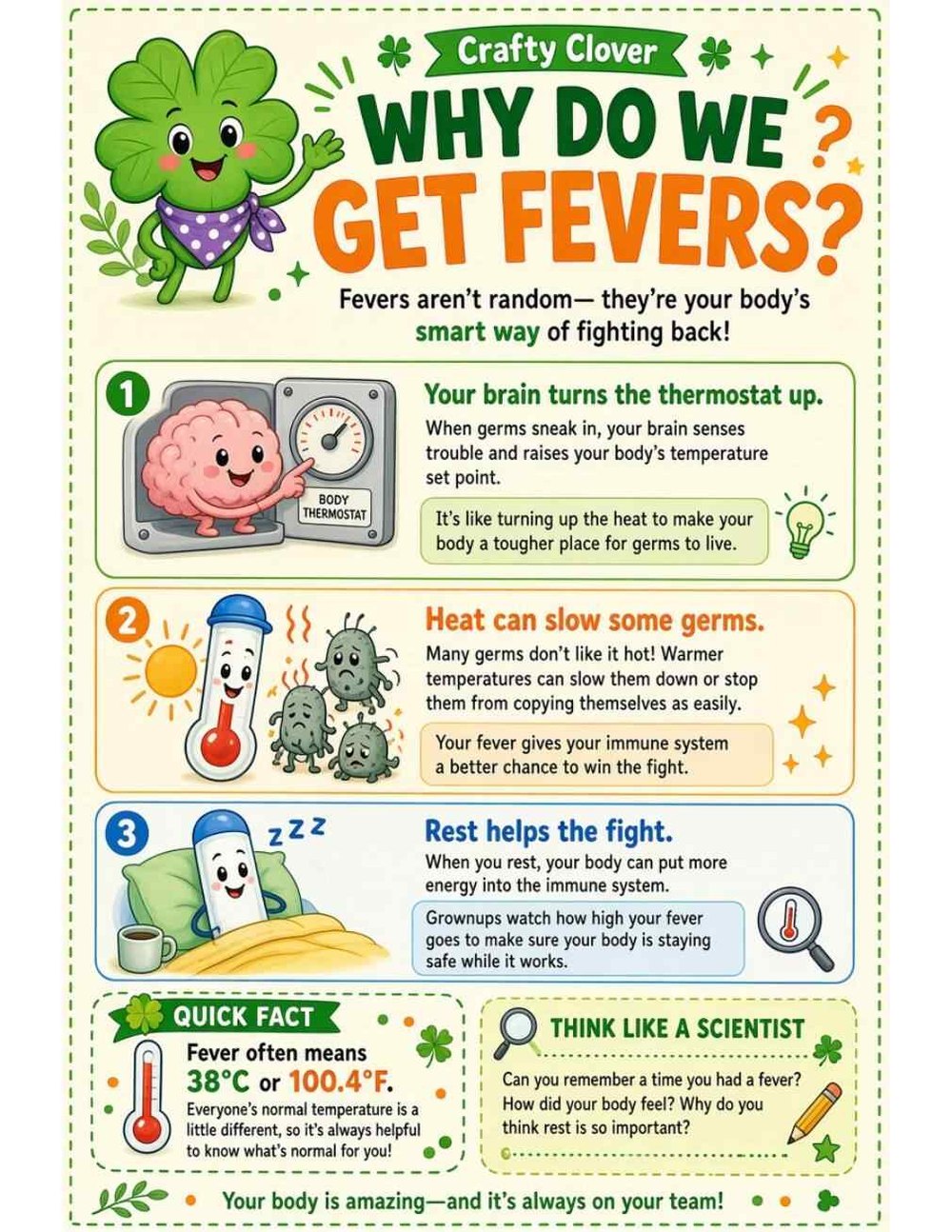
Page from A Million Whys Book 1
More fun facts
- Most doctors call it a fever when your temperature reaches 100.0 or 100.4 degrees Fahrenheit, which is about 38 degrees Celsius.
- The famous normal temperature is 98.6 degrees Fahrenheit, or 37 degrees Celsius. But each person's normal can be different by a degree or more.
- Babies and young children usually run a little warmer than older kids and grown-ups.
- A fever is often a sign that your immune system has switched on to fight an infection.
- Your body treats a virus or bacteria as an attack, and raising your temperature is part of its defense.
- Most fevers are not a serious concern.
Sources: Cleveland Clinic, Cleveland Clinic
Questions kids ask
What temperature counts as a fever?
Most doctors say a fever starts at 100.0 or 100.4 degrees Fahrenheit, about 38 degrees Celsius.
Is a fever bad?
Usually not. It is your body's normal way of fighting an infection. Tell a grown-up if you feel sick so they can check on you.