
Book 1, Question 36
Why Do Chameleons Change Color? It's More Than Hiding!
Chameleons change color to attract mates, control body temperature and warn intruders, not just to hide.
Chameleons do not just change color to hide. Their skin has stacked layers, like a tiny living sandwich, and cells in the layers tilt and stretch like blinds on a window, changing which colors bounce back to our eyes. Color can help them blend in, show how they feel, or manage body heat, but it is not instant magic, since changes take seconds to minutes. The page says a calm chameleon may stay green, while a stressed or excited one might turn bright yellow, orange or darker.
Watch the videoWatch on YouTubeBuy on Amazon
Quick answers
How does color help with temperature?
Turning darker helps a chameleon warm up, because dark colors soak up more heat.
How do they change color?
Scientists at the University of Geneva found tiny crystals in special skin cells that reflect light like mirrors.
Sources: National Geographic Kids, BBC
From the book
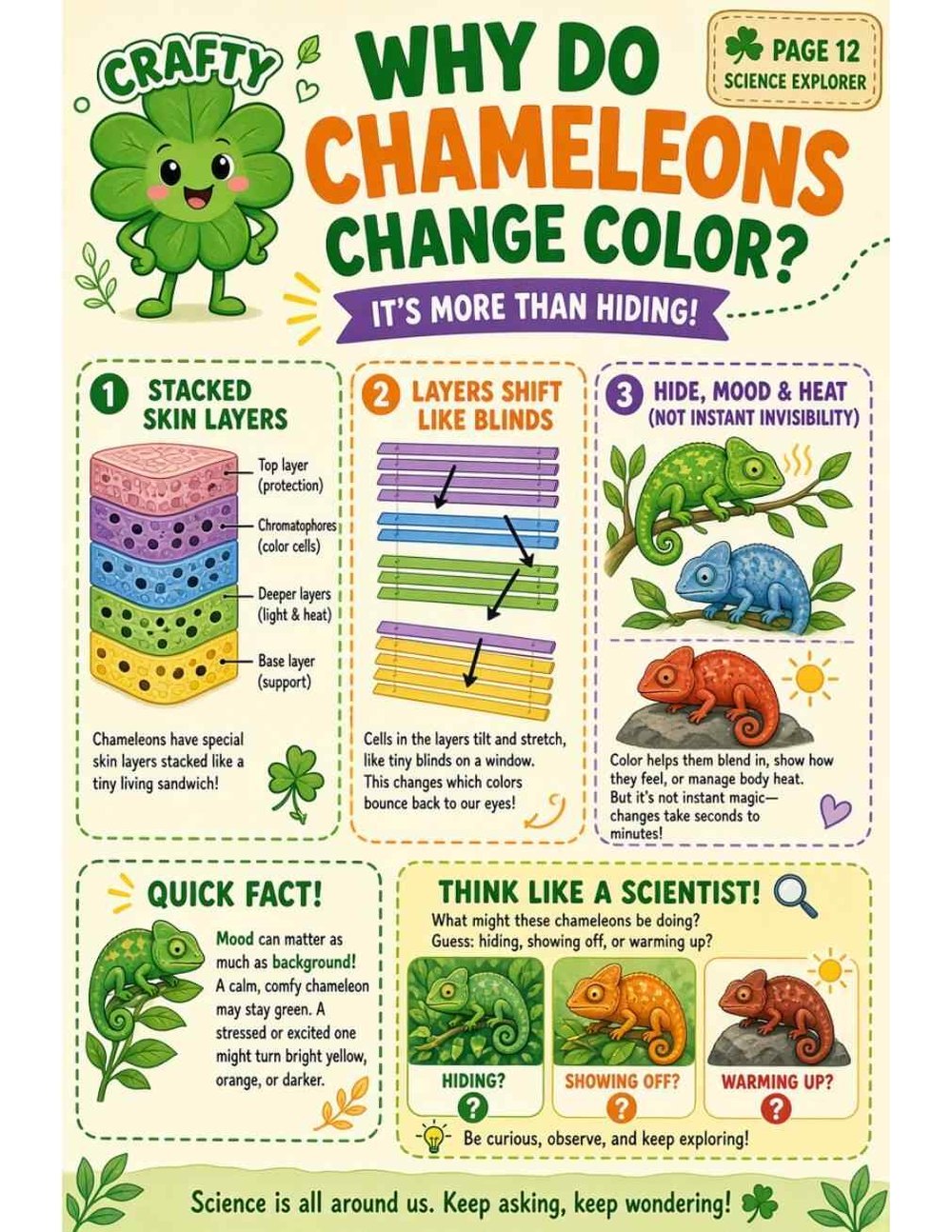
Page from A Million Whys Book 1
More fun facts
- Chameleons change color to attract mates, control their body temperature, and tell intruders to stay away.
- Turning darker helps a chameleon warm up, because dark colors soak up more heat.
- Chameleons that live in trees are usually green.
- Most chameleons live in the rain forests and deserts of Africa.
- The outer layer of their skin is see-through.
- Scientists at the University of Geneva found that tiny crystals in special skin cells help panther chameleons change color. The crystals reflect light like mirrors.
- Before that discovery, scientists thought chameleons changed color only by using pigment in their skin.
- Those crystal cells may also help keep chameleons cool by reflecting light.
Sources: National Geographic Kids, BBC
Questions kids ask
Do chameleons change color only to hide?
No. They also change color to attract mates, warm up or cool down, and warn others to stay away.
How do chameleons change color?
Special skin cells hold tiny crystals that reflect light. Changing how the crystals are arranged changes the color you see.