
Book 1, Question 101
Why Does Popcorn Pop? A Tiny Pressure Cooker!
Popcorn pops because water inside each kernel turns to steam when heated, building pressure until the hard hull bursts and the starch puffs out.
Every popcorn kernel is a tiny pressure cooker with water inside. When it is heated, the water turns into steam, and the steam bursts the tough outer shell, called the pericarp, while the starch puffs into white foam. The page says popcorn pops at about 180 degrees C. Compare unpopped and popped kernels afterward: hard, small and smooth versus light, big and fluffy!
Watch the videoWatch on YouTubeBuy on Amazon
Quick answers
What is the best popping temperature?
Scientists using high-speed cameras found it is about 356 degrees Fahrenheit (180 degrees Celsius).
Why does popcorn jump?
Long chains of starch packed like springs snap outward and make the popcorn jump.
Sources: Science News Explores, Science News Explores
From the book
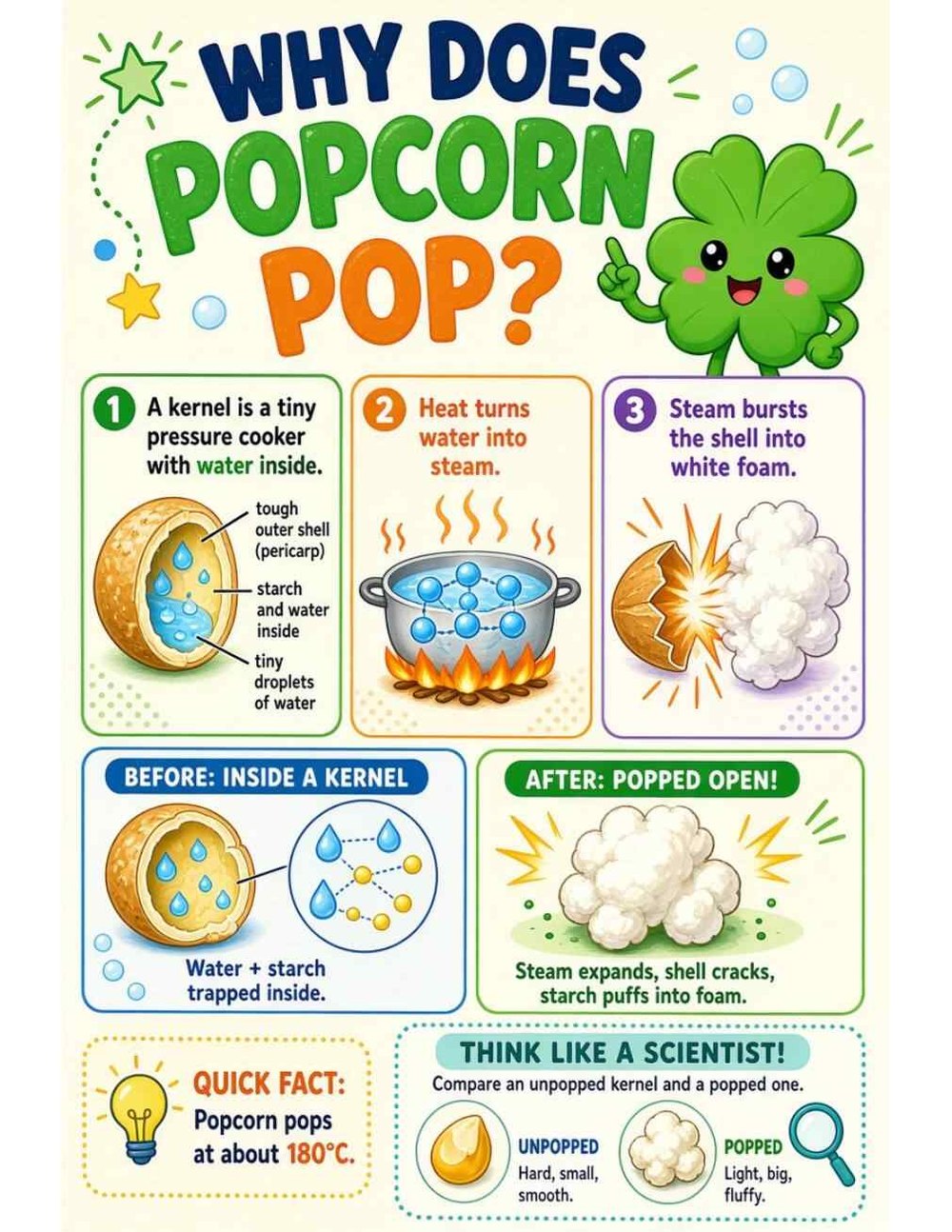
Page from A Million Whys Book 1
More fun facts
- People have been popping corn for centuries.
- A popcorn kernel's tough outer shell, the hull, is made of cellulose, the same stuff that forms plant cell walls.
- Scientists using high-speed cameras found the best popping temperature is about 356 degrees Fahrenheit (180 degrees Celsius).
- Inside a popped kernel, long chains of starch are packed like springs. When they snap outward, the popcorn jumps.
- Scientists say a popping kernel moves a bit like a seed bursting from its pod and a bit like a muscle making an animal jump.
- The puffy white part of popcorn is made of stretched-out starch.
Sources: Science News Explores, Science News Explores
Questions kids ask
At what temperature does popcorn pop?
Scientists found about 356 degrees Fahrenheit (180 degrees Celsius).
Why does popcorn jump?
Springy chains of starch snap out of the kernel and push it into the air.