
Book 6, Question 48
Why Doesn't an Anemone Sting a Clownfish?
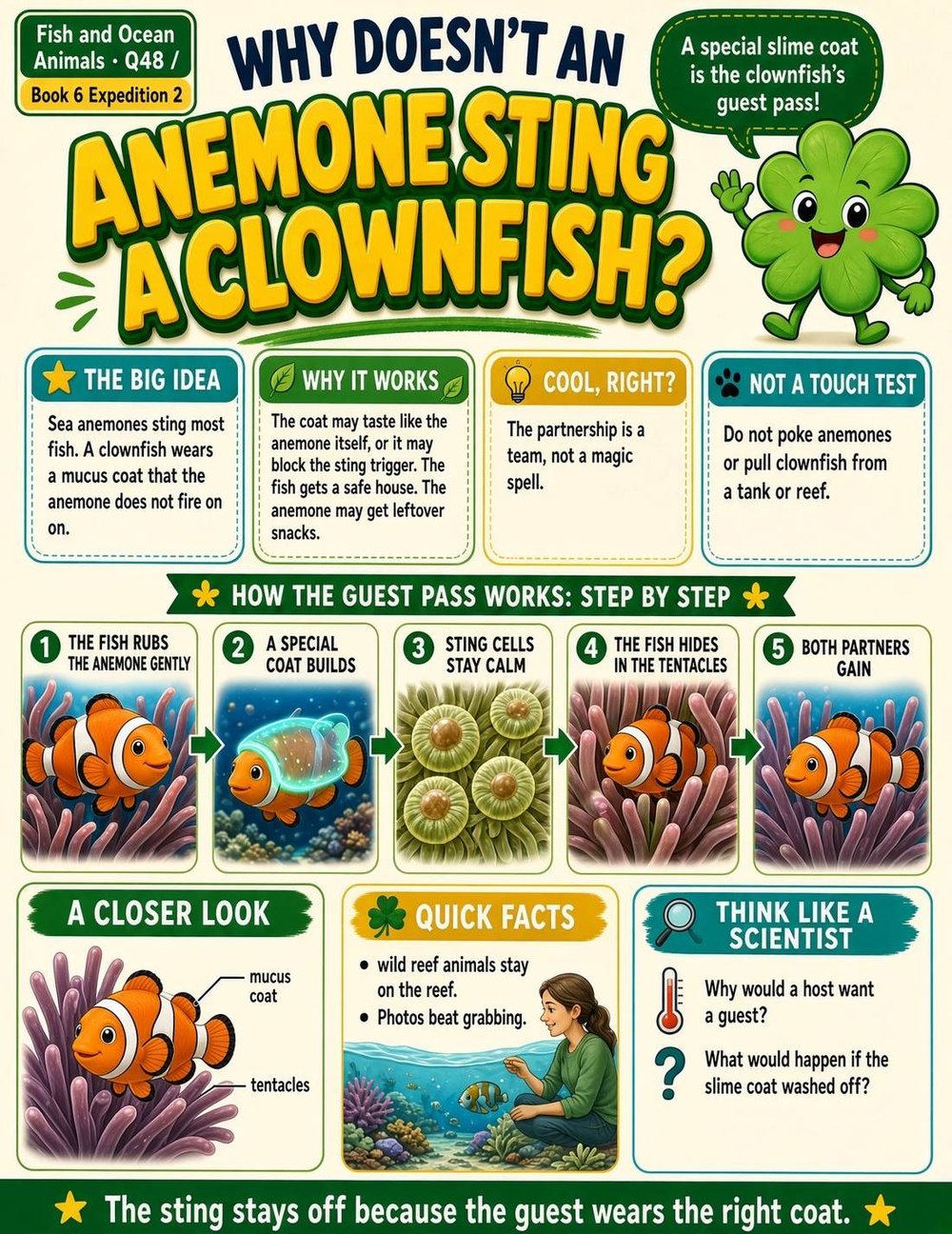
An anemone doesn't sting a clownfish because a layer of slime on the clownfish's skin keeps the stinging cells from firing.
A sea anemone has tentacles with stinging cells that can sting most fish. But a clownfish wears a special coat of mucus, which is a kind of slime. That coat keeps the anemone from firing its stingers at its guest.
Watch the videoWatch on YouTubeSee the series on Amazon
Quick answers
How do they help each other?
The anemone protects the clownfish, and the clownfish chases off butterflyfish that would eat the anemone.
Sources: National Geographic, National Geographic, National Geographic
From the book
Page from A Million Whys Book 6
More fun facts
- A layer of slime on a clownfish's skin keeps the anemone from firing its stinging cells.
- Scientists still are not sure exactly how the slime protection works.
- Before moving in, a clownfish does a careful dance, gently touching the tentacles with different body parts until it gets used to its new home.
- The anemone protects the clownfish, and the clownfish chases off butterflyfish that would eat the anemone.
- There are at least 30 kinds of clownfish, most living in the Indian Ocean, the Red Sea and the western Pacific.
- Clownfish cannot survive without a host anemone.
Sources: National Geographic, National Geographic, National Geographic
Questions kids ask
Why don't anemones sting clownfish?
A layer of slime on the clownfish's skin stops the anemone's stinging cells from firing.