
Book 6, Question 130
Why Is Plastic in the Ocean a Problem?
Plastic in the ocean is a problem because it never fully breaks down and just splits into smaller and smaller pieces.
Plastic is built not to rot, so it lasts a very long time in the sea. Waves and sunlight break it into smaller and smaller bits, but those bits don't turn into food. Animals can eat it, get tangled in it, or carry it far away.
Watch the videoWatch on YouTubeSee the series on Amazon
Quick answers
What are microplastics?
Pieces smaller than 5 millimeters are called microplastics.
Sources: National Geographic, NOAA, NOAA, National Geographic Kids
From the book
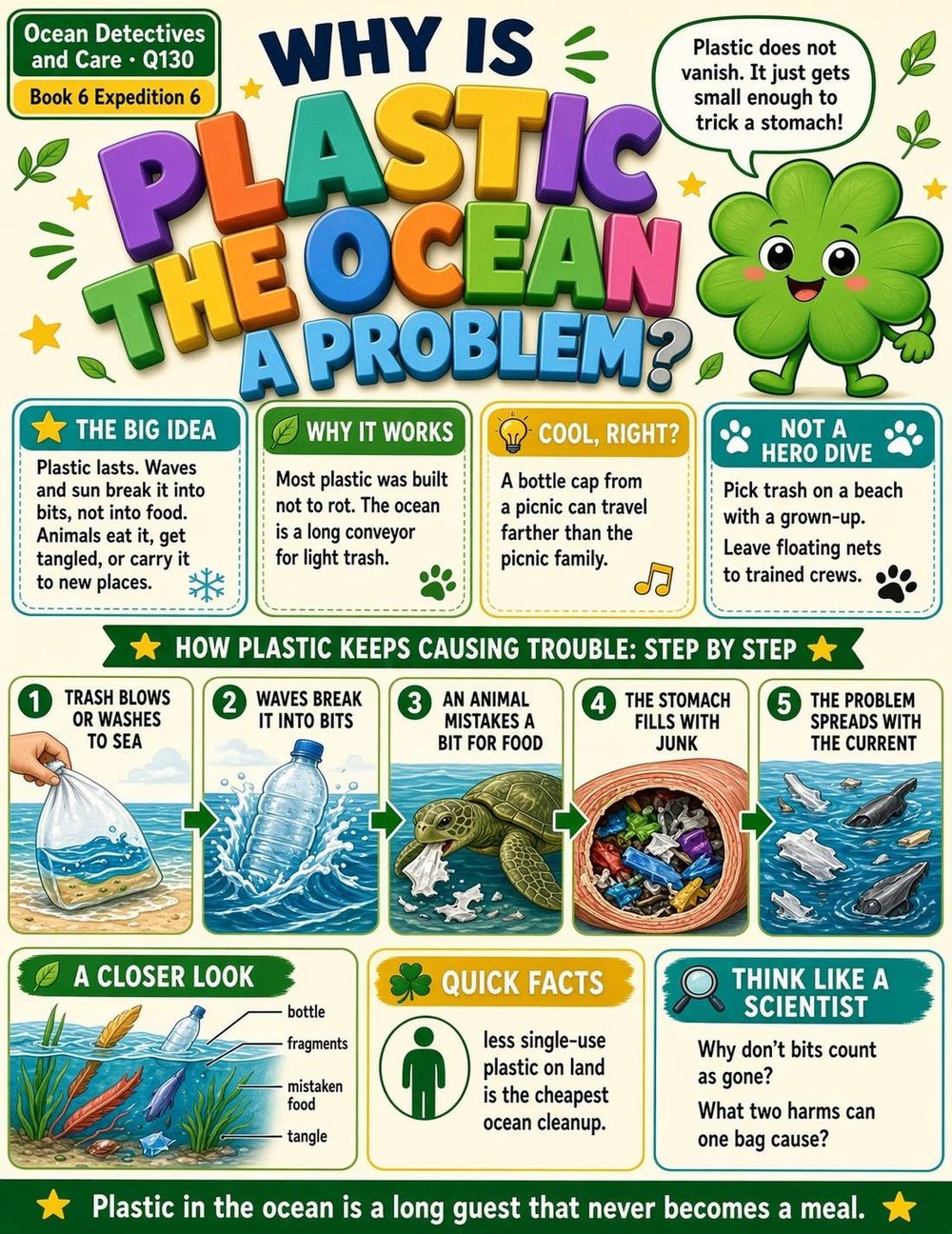
Page from A Million Whys Book 6
More fun facts
- Sunlight, wind and waves break plastic in the ocean into smaller and smaller pieces.
- Plastic never fully breaks down. Pieces smaller than 5 millimeters are called microplastics.
- Once microplastics spread through the open ocean, they are almost impossible to clean up.
- Even plastics labeled biodegradable or compostable could stay in the ocean for a very long time.
- More than 700 kinds of sea animals have been reported to have eaten plastic or gotten tangled in it.
- Stopping plastic before it reaches the water is the best way to keep the problem from growing.
Sources: National Geographic, NOAA, NOAA, National Geographic Kids
Questions kids ask
What are microplastics?
Tiny pieces of plastic smaller than 5 millimeters.